Relational Insight for Conscious Systems
Krystal Drysdale, PhD holds a doctorate in Economics, a discipline that trains attention on how systems process information, where feedback loops break down, and why capacity and incentives matter more than intention. Her work applies that systems-based lens to human perception, relationship, and meaning – bridging analytical structure with lived relational experience.
Most personal growth frameworks focus on mindset, emotions, or morality. Krystal’s work focuses on operating systems. Every human system has:
- A capacity for internal regulation.
- A way of processing responsibility
- A threshold for relational load
- A default strategy under stress
When those limits are reached, systems don’t become “bad”. They compensate. Some integrate. Some project. Some manipulate. Some collapse. Some require others to carry the excess. Understanding this removes shame – and restores agency. You stop asking “what’s wrong with me?” You start asking “what is the structure here?” That’s where power returns. Drawing on both formal training and a decade of spiritual and reflective practice, Krystal’s book series reframes relational and spiritual discourse without moralization or doctrine. Her work is not about belief – it is about structure.
Understanding human operating systems and their structural capacity will allow you to stop shrinking inside systems that cannot meet you. You are allowed to be seen without carrying everything alone. You are allowed to leave structures that require your diminishment. And you are allowed to build relationships that expand rather than contract you.
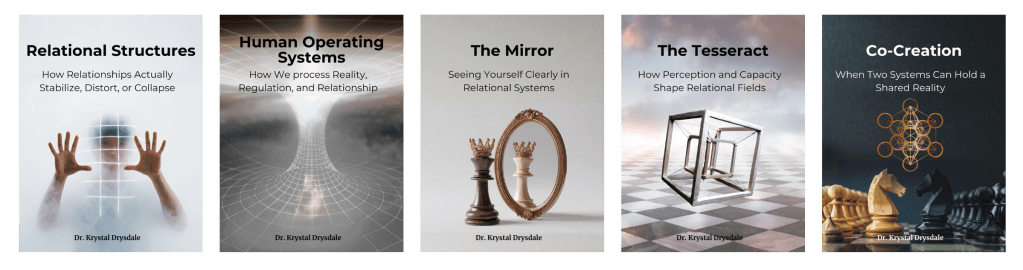
However, this isn’t just self-help in the sense you might be used to. This is human relational literacy. Relational Structures and Human Operating Systems provide the framework while The Mirror, The Tesseract, and Co-Creation show you where you exist inside it.
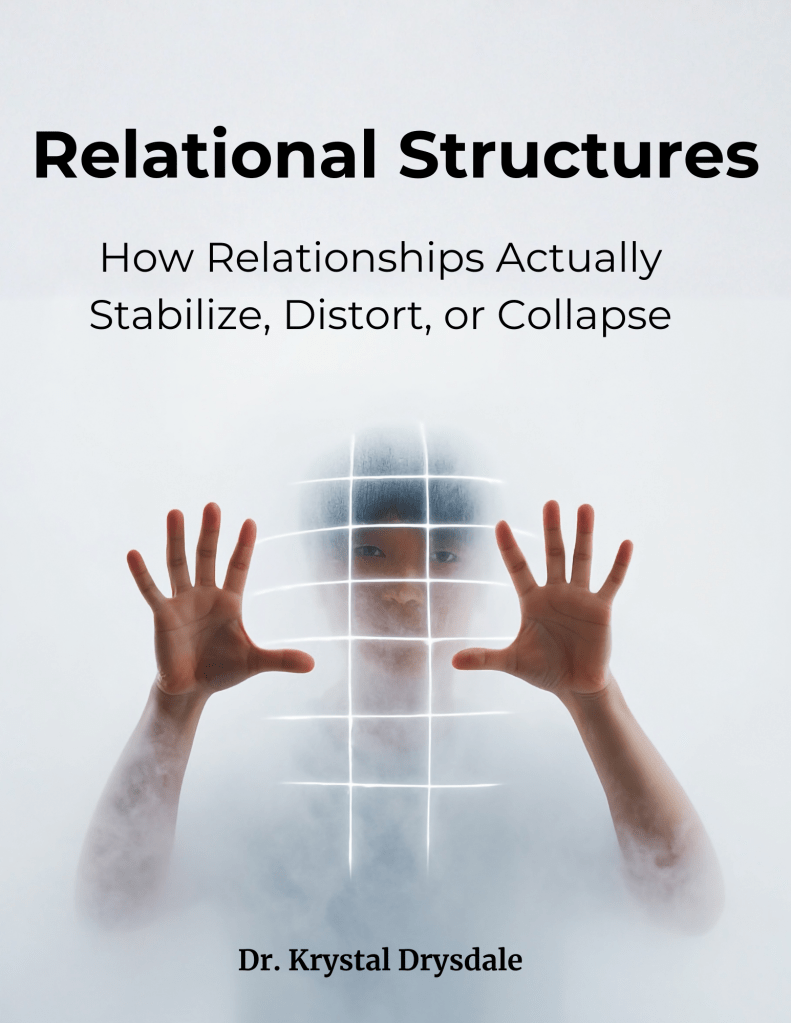
Most relationship books focus on emotions or communication. Relational Structures focuses on architecture. Drawing from economics and systems theory this book reveals how human relationships organize around capacity, responsibility, and constraint – and why some stabilize while others quietly export cost until they break. Rather than asking who is right or wrong, it shows how imbalance forms structurally: hidden subsidies, over-functioning, externalized regulation, and the invisible labor carried by high-capacity systems. This is not self-help. It is diagnostic framework for relational reality. Once you see the structure, you stop personalizing the outcome.
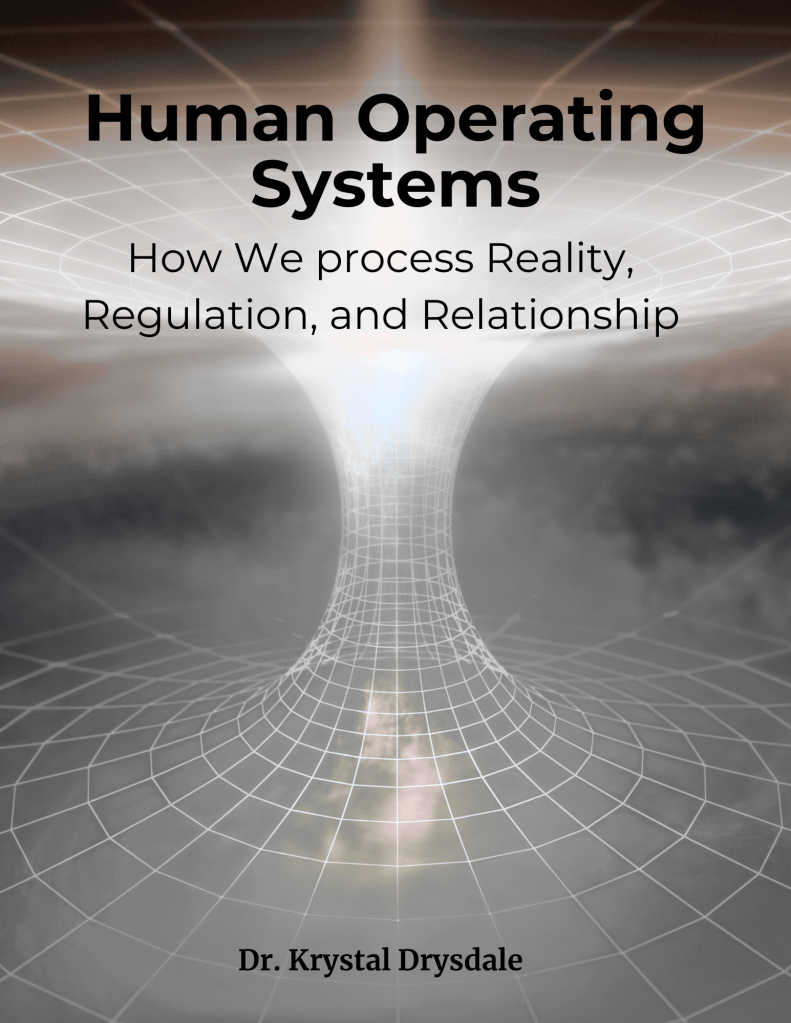
Behavior isn’t the root. Architecture is. The Human Operating System introduces a foundational framework for understanding how people regulate emotion, integrate feedback, assign responsibility, and construct meaning. It explains why some systems grow through challenge while others offload their internal work onto relationships – and why insight alone cannot create change where capacity is limited. This book gives readers a clear lens for recognizing compatibility, releasing extractive dynamics, and understanding why co-creation requires internal regulation on both sides. You cannot co-create with someone whose operating system cannot receive what you bring. This book shows you how to tell the difference.
The Mirror is about recognition. It invites readers to see how they become positioned inside relationships – not through fault or failure, but through perception. This book explores how clarity turns into responsibility, how sensitivity becomes labor, and how those who see more clearly often end up carrying more. Rather than offering advice or prescriptions, The Mirror functions as a reflective surface – revealing unconscious roles, relational patterns, and the subtle ways people learn to shrink in order to stay connected. It’s the beginning of awareness. You don’t change anything yet…you simply see.
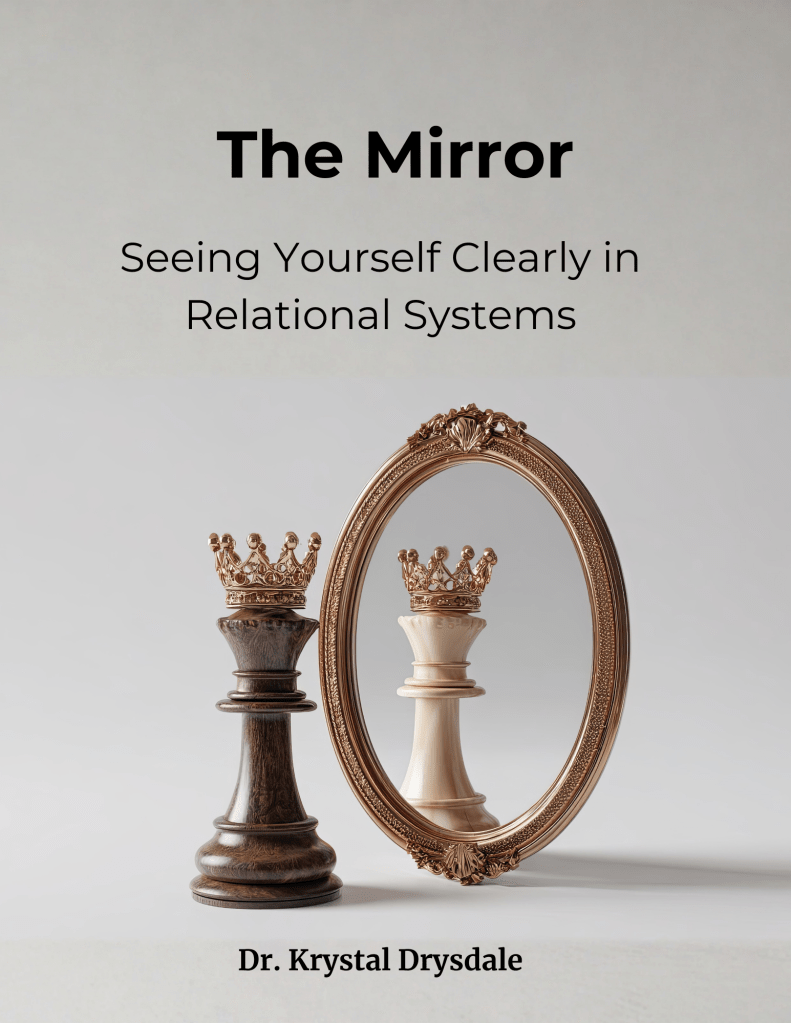
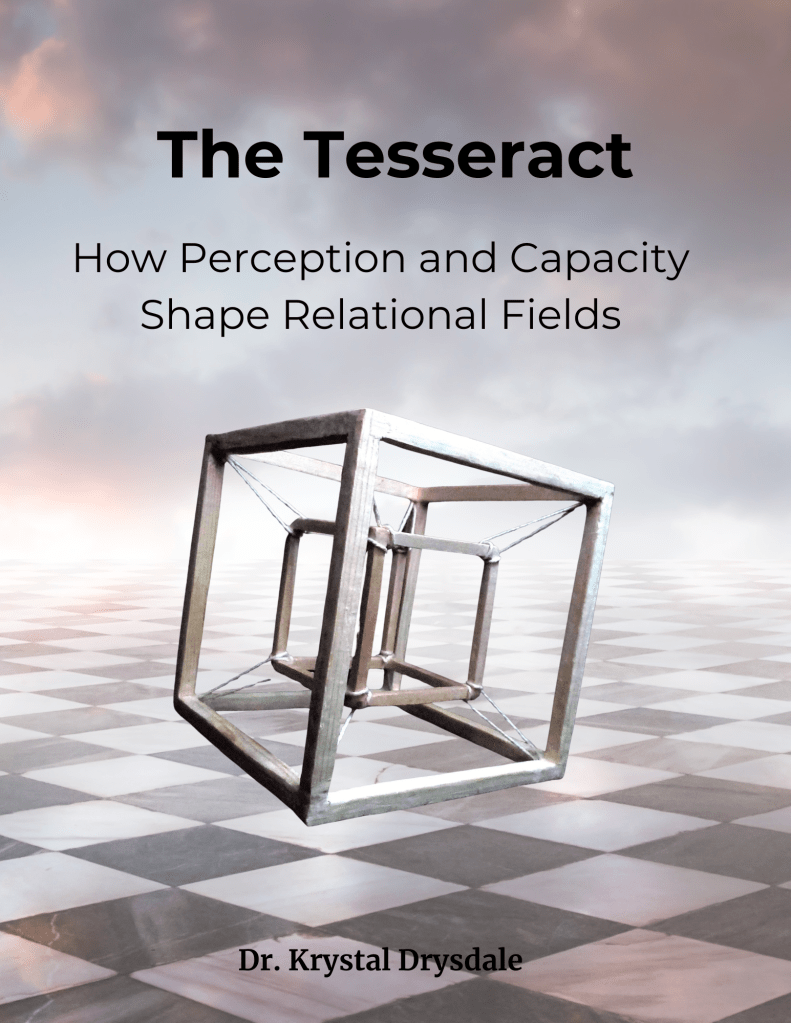
If The Mirror shows you yourself, The Tesseract shows you the system. This book expands perception beyond individual experience into multidimensional relational fields – revealing how projection forms, why clarity destabilizes certain dynamics, and how capacity limits shape behavior across romantic, familial and professional relationships. Here, readers learn to recognize one-way relational structures, externalized regulation, and the hidden geometry beneath emotional exchanges. The Tesseract doesn’t teach healing – it teaches orientation. You stop asking, Why is this happening to me? You start seeing how systems organize reality.
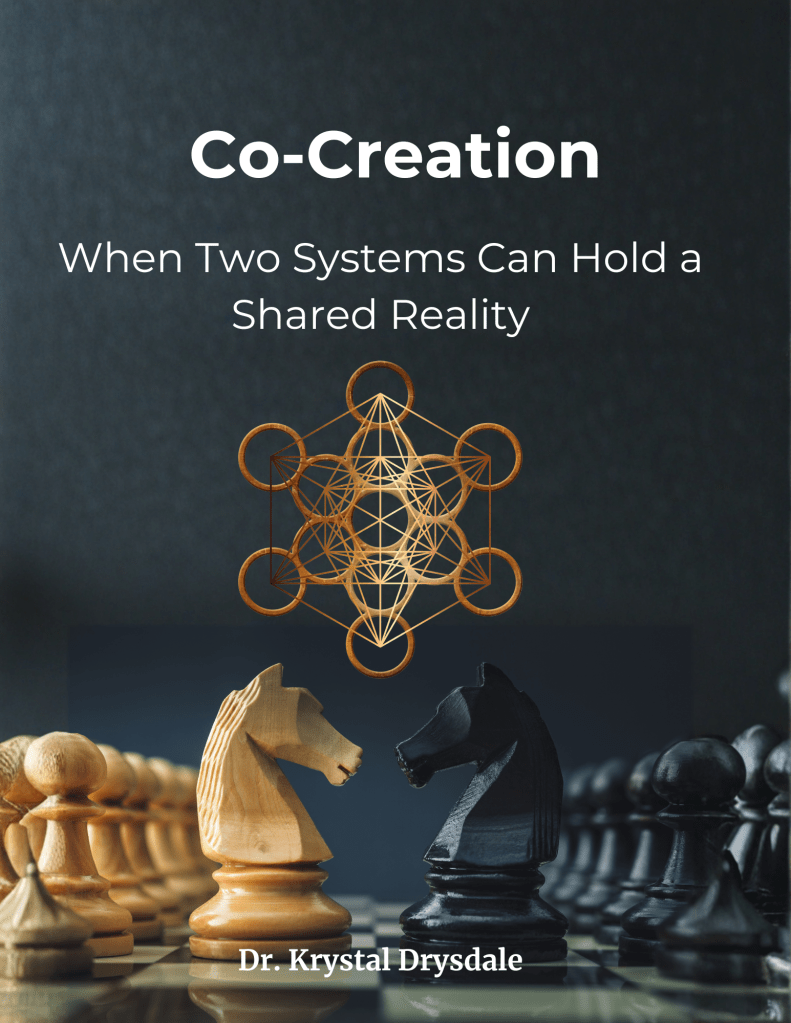
Co-Creation is where structure becomes personal. This volume explores the lived consequences of relational asymmetry – to overgive, to shrink, to carry invisible weight – and what changes when reciprocity finally enters the field. Here readers confront a quiet truth: Not all systems can co-create. Co-Creation requires internal regulation on both sides. Where one system exports load, the other must contract to compensate. That is not partnership. That is subsidy. This book guides readers through the transition from endurance to embodiment – from honoring non-performing relational contracts to choosing shared reality instead. This is where clarity becomes liberation.
 Sapphire Stardust